Much of the language around resilience is reactive, focused on plans, exercises and response. But the challenges of today and tomorrow require a different approach. For businesses, resilience must be treated as a strategic imperative, embedded in strategy and business model decisions.
True resilience means building the capacity to absorb shocks, increasing diversity to adapt to them, and reducing fragility by eliminating single points of failure. Without this shift in thinking, we risk simply reacting to events rather than preparing for them.
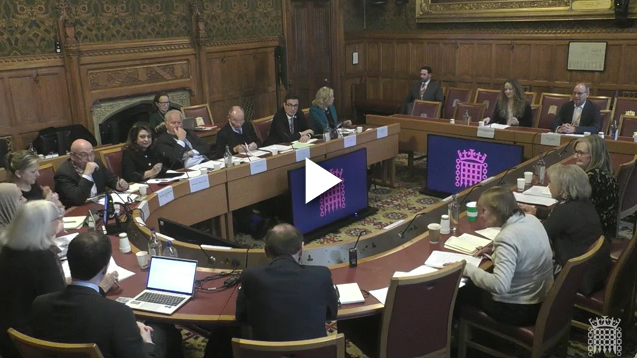
Our Executive Director, Rick Cudworth, recently gave oral evidence to the House of Lords Select Committee on National Resilience, highlighting the need to make resilience a core part of business strategy. You can watch the recording here.
In his evidence, Rick highlighted several key points:
- Government and businesses share a common interest in a safe, stable and investable UK – and resilience is central to achieving this.
- Businesses depend on resilient people and communities. A workforce that is able and willing to work following a significant disruption depends on resilience at home and in local communities.
- Businesses should therefore be seen as partners in national resilience and as an important lever for the government in strengthening the UK’s overall resilience.
To achieve this, Rick emphasised that government (both central and local) should engage the private sector more directly and systematically in national resilience, and encourage businesses to:
- Prepare employees at home, not just at work.
- Support community resilience.
- Take responsibility for their own resilience.
The Committee, chaired by Baroness Coussins, was appointed on 27 January 2026 and will report by 30 November 2026. It has also launched a call for written evidence and is inviting views on national resilience in the UK. You can find out more and submit evidence here.